Load balancers
the unsung heroes of the modern web
Introduction
Every second, millions of users browse websites, stream videos, shop online, and use social media platforms. During big events like IPL matches, flash sales, or movie releases, traffic on these platforms suddenly increases massively. Still, applications like Netflix, Amazon, Instagram, and YouTube continue working smoothly. How? Behind the scenes, one technology silently manages all this traffic: Load Balancers. They are one of the most important parts of modern backend systems, helping applications stay fast, scalable, and available even under huge traffic spikes.
What is a Load Balancer?

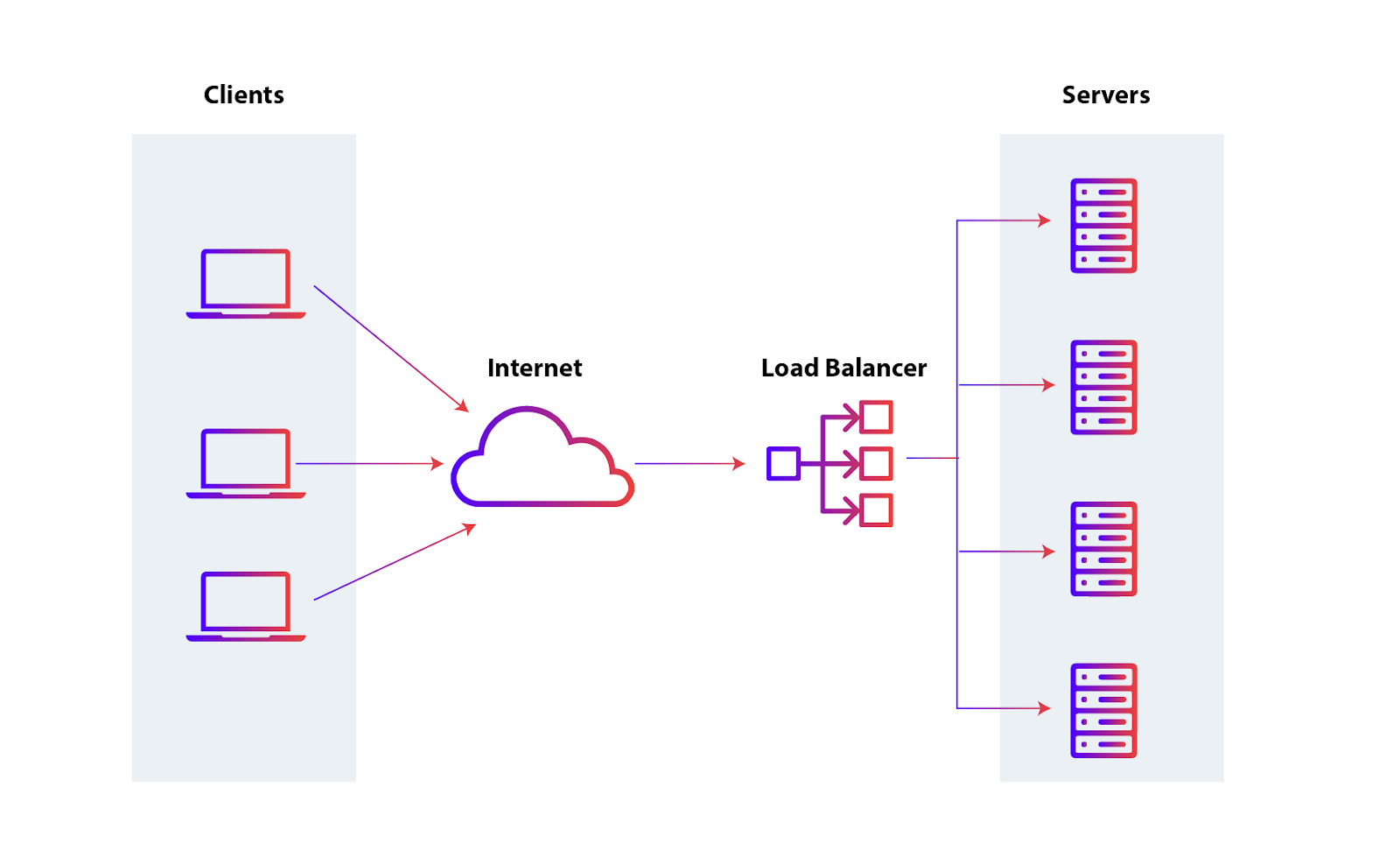
A load balancer is a system that distributes incoming traffic across multiple servers instead of sending everything to a single machine. Think of it like a traffic police officer controlling vehicles at a busy intersection. Instead of allowing all cars to use one road and create traffic jams, traffic is distributed across multiple roads to keep movement smooth. The same thing happens in web applications.
Users
   ↓
Load Balancer
 ↙  ↓  ↘
Server A Server B Server C
Whenever a user sends a request, the load balancer decides which server should handle it. This prevents servers from becoming overloaded and improves application performance.
Why Are Load Balancers Important?
Without load balancing, all requests would hit a single server. Imagine millions of users trying to access the same server during a flash sale: The result would be: Slow website Crashes Downtime Poor user experience Load balancers solve this by distributing requests evenly across multiple servers. Because of this: Applications become scalable Downtime reduces Performance improves Traffic spikes can be handled smoothly That’s why almost every large tech company uses load balancing.
How Load Balancers Work
The working process is simple. A request first reaches the load balancer instead of directly reaching the backend server. The load balancer then checks: Which server is healthy Which server is less busy Which server can respond faster After making a decision, it forwards the request to the selected server. Client Request ↓ Load Balancer ↙ ↓ ↘ Server1 Server2 Server3 This entire process happens within milliseconds.
Types of Load Balancers
Hardware Load Balancers Hardware Load Balancers These are physical devices specially designed for traffic distribution. They are extremely powerful but expensive, so they are mostly used in large enterprises and banking systems. Examples: F5 BIG-IP Citrix ADC
Software Load Balancers
These are software-based solutions that run on servers or cloud systems. Popular examples include: NGINX HAProxy Envoy Traefik They are flexible, cost-effective, and widely used in modern applications.
Cloud Load Balancers
Cloud providers offer managed load balancing services. Examples: AWS Elastic Load Balancer Google Cloud Load Balancer Azure Load Balancer These automatically scale according to traffic and reduce infrastructure management.
Load Balancing Algorithms
The most important part of a load balancer is its routing algorithm. These algorithms decide how traffic should be distributed. 1. Round Robin Algorithm This is the simplest algorithm. Requests are distributed one by one across servers. Request 1 → Server A Request 2 → Server B Request 3 → Server C Request 4 → Server A It works well when all servers have similar capacity. 2. Weighted Round Robin Some servers are more powerful than others. Weighted Round Robin gives stronger servers more traffic. Server A → Weight 5 Server B → Weight 2 This means Server A receives more requests because it can handle more load. 3. Least Connections This algorithm sends traffic to the server with the fewest active connections. Example: Server A → 200 users Server B → 20 users The next request goes to Server B because it is less busy. This works well for chat applications and streaming systems. 4. IP Hashing In this method, the user’s IP address determines which server handles the request. This helps maintain session consistency. For example, if a user logs into a shopping website, all requests may continue reaching the same server during that session. 5. Least Response Time This algorithm chooses the server responding the fastest. Instead of only checking load, it focuses on user experience and lower latency. Health Checks Modern load balancers continuously monitor server health. If a server crashes or stops responding: Server B the load balancer automatically removes it from rotation and redirects traffic to healthy servers. This improves reliability and reduces downtime. Layer 4 vs Layer 7 Load Balancing Layer 4 Load Balancer Works at the transport layer using: TCP UDP IP addresses Port numbers It is very fast because it does not inspect actual request content. Layer 7 Load Balancer Works at the application layer using HTTP and HTTPS traffic. It can inspect: URLs Headers Cookies Example: /payments → Payment Service /images → CDN /api/users → User Service Layer 7 load balancing is heavily used in microservices architecture. Load Balancers in Modern Applications Modern applications are built using microservices. Instead of one giant backend, systems are divided into multiple services: Authentication Service Payment Service Notification Service User Service Load balancers route traffic intelligently between these services. This is why they are essential in: Kubernetes Docker Cloud-native systems Popular Load Balancing Tools Some of the most widely used load balancing tools are: Tool Best For NGINX Web applications HAProxy High-performance traffic Envoy Microservices Traefik Kubernetes AWS ELB Cloud infrastructure
Challenges of Load Balancing
Although load balancers are powerful, they also introduce some challenges. Single Point of Failure - If the load balancer itself crashes, the entire system can go down. That’s why companies use multiple load balancers with failover systems. Uneven Traffic Not all requests consume the same resources. Some requests may require heavy database operations while others are lightweight. Simple algorithms may not always distribute such traffic efficiently.
Conclusion
Load balancers are one of the most important yet invisible technologies behind the modern internet. They quietly manage traffic, prevent server overload, improve scalability, and keep applications available during massive traffic spikes. From Netflix streaming millions of videos to Amazon handling flash sales, load balancers work silently in the background every second. Most users never notice them, but without them, many modern applications simply wouldn’t survive. That’s why load balancers truly are the unsung heroes of the modern web.